
Sweep the Map
Start on the city council in your real hometown. Win it block by block, then run for mayor, governor and president, one county and one state at a time.
Free in your browser · No account · Every state, every county
The road to 270
Campaign preview
From city hall to the White House
- Council or county boardYour real town or county, drawn from its census block groups90 days
- Mayor or county headYour whole city or county, neighborhood by neighborhood120 days
- Governor or SenatorEvery county in your state180 days
- PresidentAll 50 states, DC and 538 electoral votes240 days
About 35 minutes from your first race to the presidency. Lose three times and your career is over.
The map moves with your choices
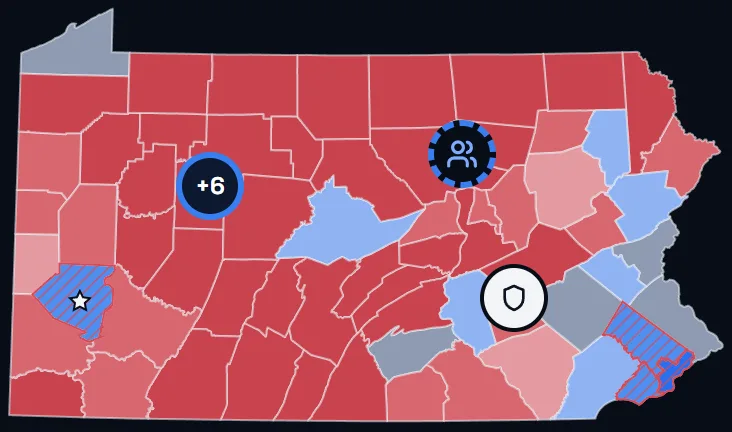
Your hometown is on the map
Pick any of 14,636 real cities, towns and communities across 3,141 counties and county equivalents. Neighborhoods carry their real names, from Munjoy Hill to Hell's Kitchen, and every county leans the way it really votes (Alaska's boroughs are estimated, since Alaska reports by legislative district).
Where you start sets your odds. A town that leans your way is friendly ground; a hostile one is a fight from day one. Georgia, Louisiana and Mississippi go to runoffs, Alaska and Maine count ranked choices, and Maine and Nebraska split their electoral votes.
Explore the states- Cities and towns
- 14,636
- Counties and equivalents
- 3,141
- States
- 50
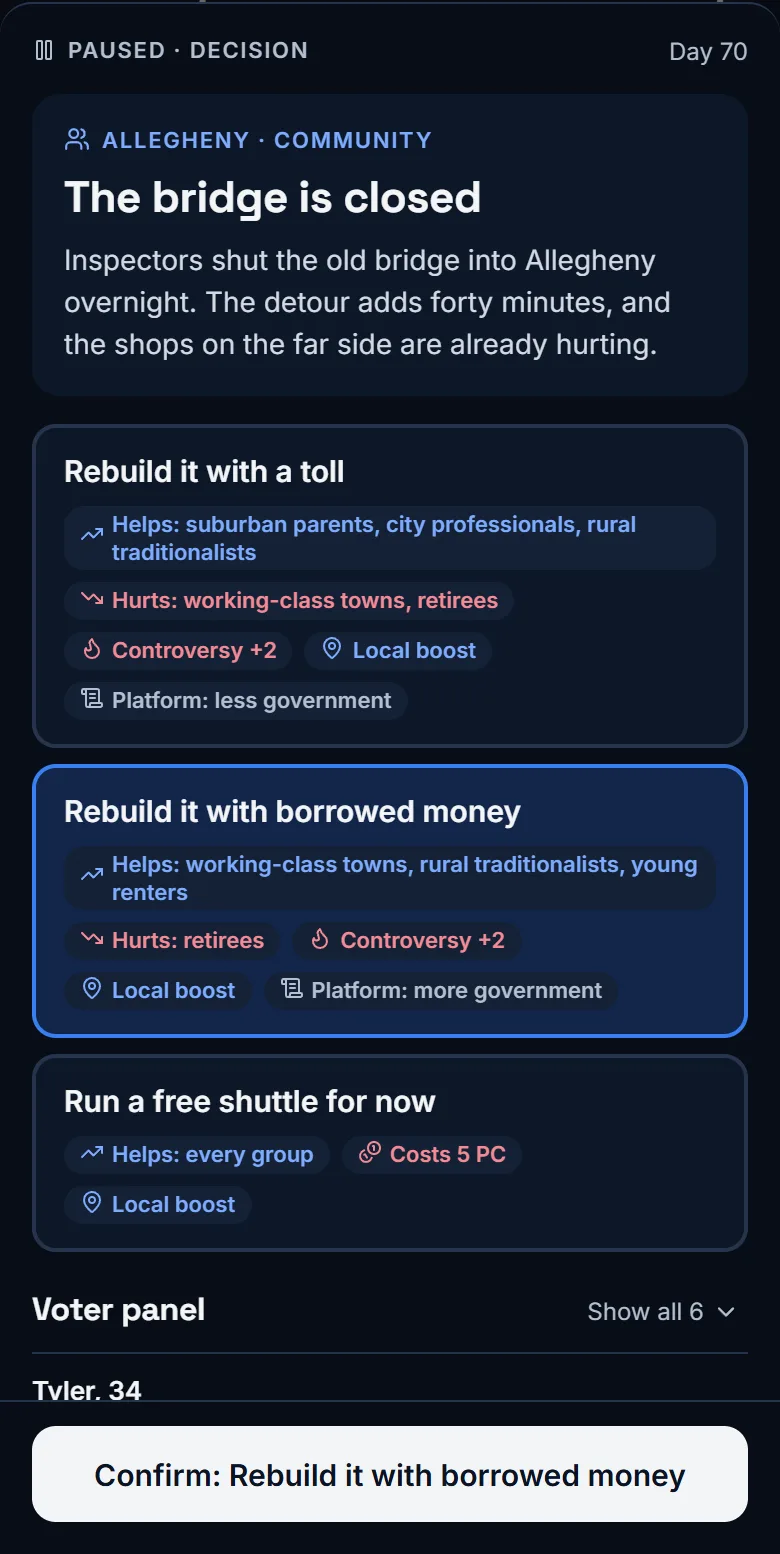
Decisions, not dice
A plant is closing. A podcast wants three unedited hours. Your volunteer leaked a file on your opponent and part of it was wrong.
Each decision shows you which voters cheer and which walk away, and what tomorrow's papers will say, before you choose.
No AI decides what happens. Every outcome comes from the same math that moves the map.
One decision. Four headlines.
No two campaigns alike
- 9 candidatesOrganizer, Outsider, Incumbent, Self-funder, Celebrity, Hometown hero, Veteran, Policy wonk, Small-business owner: each plays by different rules.
- 19 kinds of election yearWave years, recessions, a turnout surge, scandal fatigue, an independent media boom.
- 10 opponentsAttack dog, machine boss, populist, moderate, heir to a dynasty, firebrand, late closer, big spender, grassroots insurgent, damaged favorite. Each punishes a different plan.
- 32 upgrades, 16 staffEach race offers a different mix of upgrades and people to hire. Hire the staff who fit the race, more of them as the races get bigger.
- Daily races and challengesOne race a day for everyone, or send a friend your race (same map, opponent and year) and see who wins bigger.
- Headwinds and achievementsFive stacking challenge levels for when it gets easy, and 20 goals to chase.
Can you win your state?
Every state plays differently. Pick one to see how it leans, where its big towns are, and what rules it votes by.
Start a campaignThe real rules behind the game
Every race follows how its place really votes. The site explains those rules in plain words, with the laws and election offices they come from.
- Learn how US elections work
Plain-word explainers on the rules the game is built on, each with its sources.
- The 50 largest cities
How each big city elects its mayor and council: runoffs, ranked choice, party ballots and the next election.
- US elections, year by year
What is on the ballot each year: federal offices, governors, Senate seats and big-city races.
- What the research says about campaigns
Do debates, door-knocking, attack ads and endorsements change votes? What studies found, each claim checked twice.
- Game guide
Every candidate, upgrade, voter group and challenge, listed from the tables the game runs on.
- For teachers
How to use the game in a class period, and how it stays neutral.
Every block. Every county. Every state.
Play free